
With Scalable, Secure Business Operations Build For Tomorrow
Before the cloud, IT was a constant juggling act with limited storage, clunky systems, and endless maintenance. Today, cloud computing gives your business the freedom to work anytime, anywhere across multiple devices; collaborate seamlessly; and scale effortlessly. However, not all cloud solutions are created equal.
Businesses across the nation trust TeamLogic IT in Birmingham as a cloud provider because we tailor cloud services to your unique needs. We back our cloud consulting services with expert cloud support services, robust security, managed hosting, 24/7 performance, reliable cloud backup, and the flexibility to operate seamlessly across public, private, and hybrid environments.
With a pay-as-you-go model, managed cloud services transform IT from a hefty upfront capital investment into a manageable operating expense. This makes cutting-edge technology more accessible than ever, leveling the playing field for businesses of all sizes to compete and thrive.
Whether you’re planning for steady growth or building a remote-ready team, cloud implementation helps future-proof your organization. TeamLogic IT can help you discover what the right cloud solution can do for you.
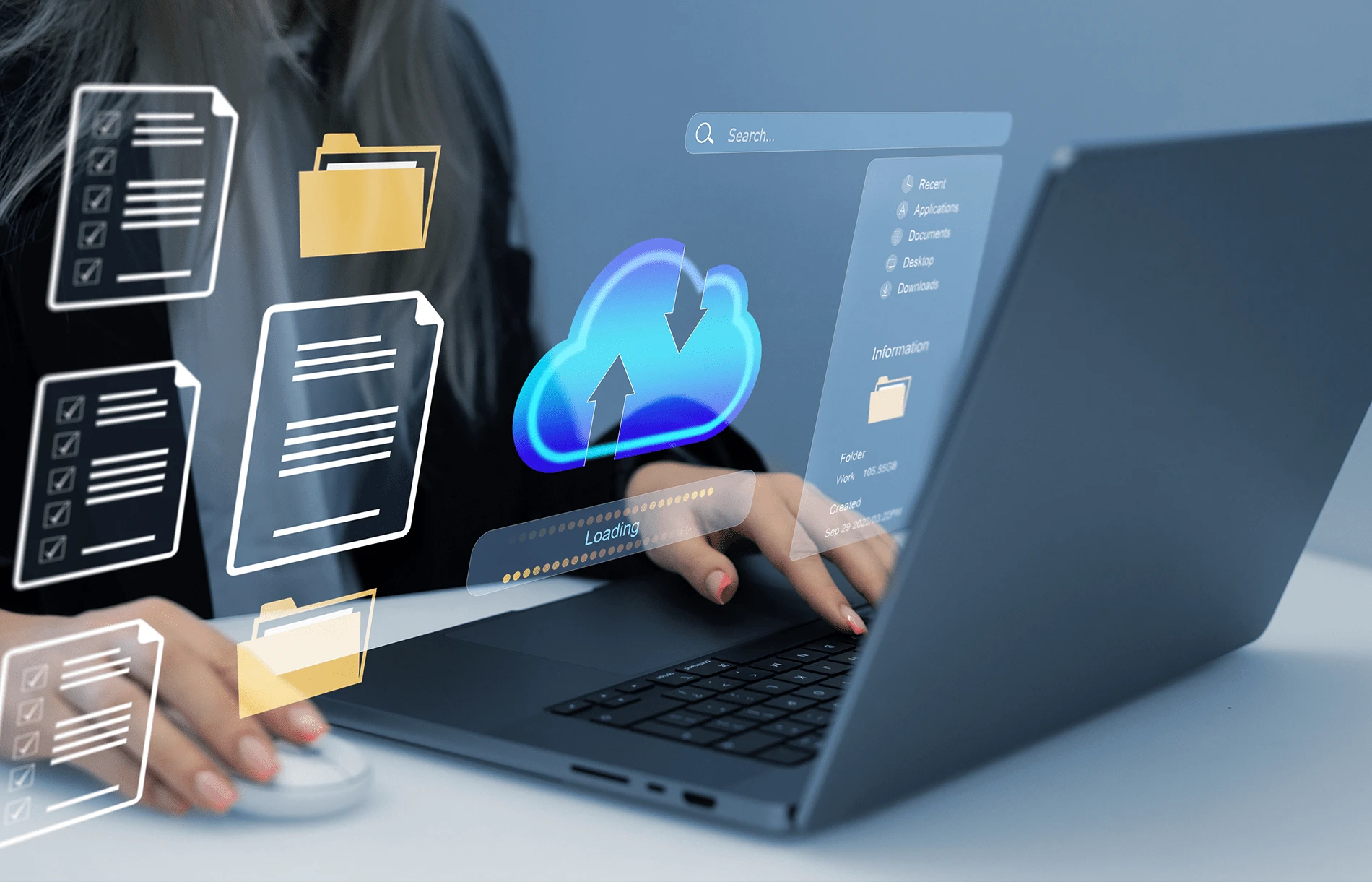
Over the last few years more businesses have turned to the cloud to future proof their business. Cloud services allow you to work anytime, anywhere, across multiple devices.
Choosing the Right Cloud Environment for Your Business
Choosing the right cloud environment starts with understanding the differences between public, private, and hybrid cloud models. Public cloud environments provide shared, internet-based resources that offer scalability, flexibility, and cost efficiency, making them ideal for businesses that need to quickly expand without investing heavily in cloud infrastructure. Private cloud environments, on the other hand, are dedicated to a single organization and provide greater control, customization, and security for sensitive data or compliance-driven workloads.
Hybrid cloud environments combine elements of both, allowing businesses to keep critical systems and data in a private environment while leveraging the scalability and accessibility of the public cloud when needed. TeamLogic IT notes that modern cloud solutions can operate across public, private, and hybrid environments, enabling businesses to select the approach that best aligns with their operational goals and security requirements.
Determining the right cloud setup depends on a variety of business-specific factors. Organizations must evaluate the sensitivity of their data and performance expectations. Determining the right cloud setup depends on a variety of business-specific factors. Organizations must evaluate the sensitivity of their data, performance expectations, IT compliance requirements, budget constraints, and long-term growth plans. For example, companies handling highly regulated information may prioritize the security and control of a private cloud, while organizations seeking rapid scalability may benefit from a public cloud model.
Many businesses find that a hybrid environment offers the best balance, allowing them to maintain control over mission-critical assets while taking advantage of the flexibility and cost efficiencies of public cloud resources. Rather than viewing cloud adoption as a single decision, businesses should approach it as a strategic investment that supports productivity, collaboration, security, and operational agility.
Cloud services are not one-size-fits-all, which is why ongoing evaluation is essential. As organizations grow, adopt new technologies, support remote workforces, or face changing compliance requirements, their cloud strategy may need to evolve. A cloud environment that meets today’s needs may require adjustments, such as cloud performance optimization, to maintain performance, security, and cost efficiency.
Businesses should regularly assess their infrastructure, usage patterns, and operational objectives to ensure their cloud environment continues to support both current operations and future goals. By choosing a flexible cloud strategy with scalable cloud solutions and revisiting it over time, organizations can confidently adapt to changing business demands while maximizing the value of their technology investments.
TeamLogic IT in Birmingham emphasizes tailored business cloud solutions that scale with growth and adapt to evolving requirements, reinforcing the importance of a cloud strategy designed for both present and future success.

Cloud Infrastructure
Managing IT shouldn’t pull you away from running your business, growing your team, or serving your customers. That’s why Cloud Migration and Management services from TeamLogic IT provide end-to-end support—from setting you up in the cloud to making sure your systems run smoothly every day. We’ll develop a cloud migration strategy tailored to your unique needs, so whether you’re expanding to new locations, enabling remote work, or launching new projects, your technology is always one step ahead with our cloud migration services.
If the unexpected happens, such as a power outage, cybersecurity threat or system failure, disaster recovery and cloud services for business continuity from TeamLogic IT in Birmingham will keep your business moving without missing a beat. Another upside: cost optimization. You’ll have complete visibility into your cloud spend, transforming it into a manageable operational expense. Invest your energy in work that matters, knowing your cloud environment is built to grow with you.

Cloud Migration and Management
Managing IT shouldn’t pull you away from running your business, growing your team, or serving your customers. That’s why Cloud Migration and Management services from TeamLogic IT provide end-to-end support—from setting you up in the cloud to making sure your systems run smoothly every day. We’ll develop a cloud migration strategy tailored to your unique needs, so whether you’re expanding to new locations, enabling remote work, or launching new projects, your technology is always one step ahead with our cloud migration services.
If the unexpected happens, such as a power outage, cybersecurity threat or system failure, disaster recovery and cloud services for business continuity from TeamLogic IT will keep your business moving without missing a beat. Another upside: cost optimization. You’ll have complete visibility into your cloud spend, transforming it into a manageable operational expense. Invest your energy in work that matters, knowing your cloud environment is built to grow with you.

Cloud SecurityA security event can derail your entire workday, but with TeamLogic IT Cloud Security, you can worry less. Think of us as your company’s go-to for catching threats before they disrupt your workflow. Here’s how we keep your business secure: |
|
| With TeamLogic IT in Birmingham as your safety net, you can run your business with confidence, knowing we’ve got your back. |
Cloud Virtual Desktop
Does your team work remotely, travel often, or split their time between the office and home? Cloud Virtual Desktop services from TeamLogic IT are designed for you. Wherever your people are—or whatever device they're using—they can log in and pick up right where they left off, enjoying the same seamless experience every time. Onboarding and offboarding are easy: add or remove users in minutes to keep your team running smoothly. With strong security and compliance built in, your data stays protected, and you can rest easy.
Plus, continuity is never a worry, even if there’s a natural disaster or a laptop crashes, your team stays up and running with access to everything they need in a secure virtual environment. Cloud Virtual Desktop services from TeamLogic IT are also optimized for Microsoft 365, Teams, and your existing storage tools, so everyone stays productive using the apps they already know and trust. Stay connected, secure, and ready for anything in a world that’s always on the go.

Simplifying User Access and Device Management in Cloud Environments
Centralized cloud platforms allow employees to securely access business applications, files, and resources from virtually any authorized device, whether they are working in the office, remotely, or while traveling. This flexibility supports today's mobile and hybrid workforces while helping organizations maintain secure, controlled access to business data. TeamLogic IT in Birmingham emphasizes cloud solutions for remote teams and hybrid workforces that improve accessibility, productivity, and collaboration without sacrificing security.
Cloud-based environments also simplify access and device management by allowing IT administrators to manage permissions, applications, and user settings from a centralized platform. This approach streamlines routine administrative tasks, reduces configuration inconsistencies, and simplifies onboarding and offboarding processes. Employees benefit from a consistent experience across devices, while organizations can improve operational efficiency, strengthen security, and reduce administrative overhead.