
Why TeamLogic IT Ranks as the Best HIPAA Compliant IT Support
Healthcare organizations depend on secure technology to protect patient information, support daily operations, and meet regulatory requirements. Choosing the right managed service provider is an important part of building an effective compliance strategy. TeamLogic IT combines national resources with locally delivered support, giving healthcare organizations access to experienced technicians who understand both technical requirements and business needs.
We deliver a comprehensive portfolio of services designed to support HIPAA compliant IT, including managed cybersecurity, cloud services, network management, business continuity planning, disaster recovery, and ongoing compliance support. Rather than treating HIPAA compliance as a one-time project, we emphasize continuous improvement through proactive monitoring, regular assessments, and documented security practices.
Whether your organization is reviewing its current security posture or preparing for future growth, TeamLogic IT can perform a comprehensive HIPAA compliance evaluation to identify opportunities for improvement and develop a practical roadmap for implementation.

What Are HIPAA Compliant IT Support Services?HIPAA compliant IT support services are managed technology solutions designed to help organizations satisfy the requirements of the Health Insurance Portability and Accountability Act (HIPAA). These services can help protect sensitive patient information through administrative, technical, and physical safeguards while supporting secure day-to-day healthcare operations. |
|
The goal is to create an IT environment that supports the systems and services that address protected health information (PHI) while also supporting reliable access for authorized users. Managed IT services also simplify ongoing compliance efforts by maintaining security controls, documenting system changes, and helping organizations respond to evolving regulatory expectations. |

What Is Electronic Protected Health Information?
Electronic Protected Health Information (ePHI) refers to any protected health information that is created, stored, transmitted, or received electronically. Examples include patient medical records, billing information, insurance details, laboratory results, diagnostic images, appointments, and electronic communications containing identifiable health information. Since ePHI exists across multiple technologies and locations, organizations must implement safeguards that maintain confidentiality, integrity, and availability throughout the information lifecycle.

What Is HIPAA Compliance?HIPAA compliance refers to meeting the requirements established under the HIPAA Privacy Rule, Security Rule, and Breach Notification Rule. Together, these regulations define how covered entities and their business associates must protect patient information. |
|
These safeguards work together to reduce risk, strengthen information security, and support consistent protection of patient information. Compliance also includes regular risk assessments, documented policies, employee training, access controls, encryption where appropriate, and procedures for responding to security incidents. Rather than representing a single certification, HIPAA compliance is an ongoing process of evaluating risks, implementing safeguards, monitoring systems, and updating policies as technology and organizational needs evolve. |

What Industries Does HIPAA Compliance Apply To?Although HIPAA is commonly associated with hospitals and physician practices, the regulations apply to a much broader range of organizations that create, receive, maintain, or transmit protected health information. |
|
Organizations that perform services involving PHI often qualify as business associates under HIPAA. These organizations must maintain appropriate safeguards and execute Business Associate Agreements (BAAs) before receiving or processing protected health information on behalf of covered entities. |

Core Capabilities to Ensure HIPAA ComplianceBuilding a secure healthcare IT environment requires more than installing security software. Organizations need an integrated compliance program that combines technology, documented processes, and ongoing oversight. TeamLogic IT in Wilmington supports HIPAA compliance by helping organizations implement all three safeguard categories required under the HIPAA Security Rule. |
|
Support is available through TeamLogic IT in Wilmington with two service models. Organizations without dedicated IT staff can fully outsource ongoing technology management, while healthcare providers with internal IT departments can choose a co-managed approach that supplements existing resources with specialized compliance expertise. |

Comprehensive Risk Assessments and Remediation
A comprehensive risk assessment serves as the foundation of every successful HIPAA compliance program. The objective is to identify vulnerabilities, evaluate potential threats, and prioritize improvements based on operational impact and regulatory requirements.
Each identified finding should receive a documented risk rating based on the likelihood of occurrence and the potential impact on protected health information. This structured evaluation allows organizations to prioritize remediation activities according to measurable business risk rather than addressing issues arbitrarily.

Implement Controls Based on Assessment Findings
Once vulnerabilities have been identified, organizations should implement corrective actions according to the priorities established during the risk assessment. Addressing the highest-risk issues first enables healthcare providers to strengthen security while using resources efficiently.
Access management should follow the principle of least privilege. Every employee should receive only the minimum system permissions required to perform assigned job responsibilities. Role-based access controls simplify permission management while reducing unnecessary exposure to protected health information.
Administrative controls are equally important. Organizations should update security policies, revise incident response procedures, strengthen vendor management processes, and establish documentation standards that support ongoing HIPAA compliance.
Every configuration change should be documented and approved through a formal change management process. Maintaining detailed records of system modifications improves operational consistency while creating an audit trail that demonstrates responsible security governance during regulatory reviews.

Access Controls, Identity Management, and Data Encryption
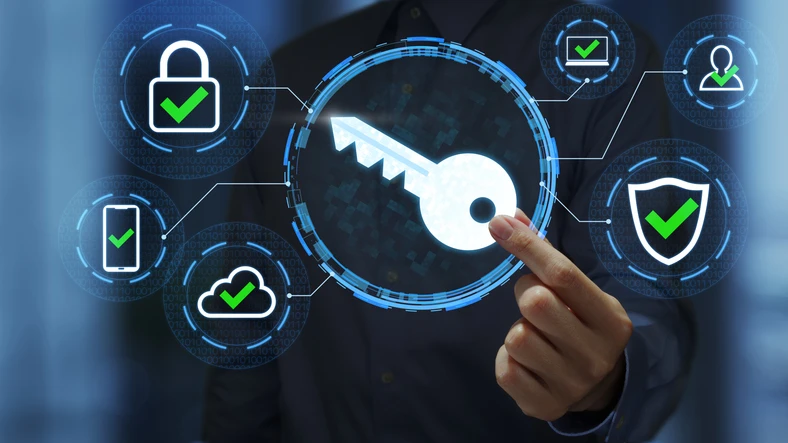
Protecting electronic protected health information begins with ensuring that only authorized individuals can access sensitive systems. Role-Based Access Control (RBAC) provides an efficient framework for granting permissions based on job responsibilities rather than individual user requests. Physicians, nurses, billing personnel, administrators, and IT staff each receive access appropriate for their responsibilities while limiting unnecessary exposure to patient information.
Organizations should regularly review user accounts to verify that permissions remain appropriate as employees change roles or leave the organization. Timely removal of inactive accounts helps reduce unnecessary security risks. Multi-Factor Authentication (MFA) should be required for all privileged users and strongly encouraged for all users accessing systems containing ePHI. Requiring multiple forms of verification significantly strengthens identity protection beyond passwords alone.
Encryption provides another critical layer of protection. Healthcare organizations should enable AES-256 encryption for data stored on servers, laptops, mobile devices, backup systems, and cloud storage environments. Encrypting stored information helps protect patient data if hardware is lost or stolen.
Employee Training and Policy Management
Technology alone cannot maintain HIPAA compliance. Employees play a critical role in protecting patient information, making ongoing education an essential component of every compliance program. Training should be tailored to each employee’s responsibilities. Clinical staff, administrative personnel, executives, and IT teams face different security challenges and should receive instruction relevant to their daily activities. Training should occur during employee onboarding and continue through scheduled annual refresher courses or whenever significant policy updates occur.

Data Backup, Disaster Recovery, And Data Protection
Reliable access to patient information depends on a well-designed backup and disaster recovery strategy. HIPAA requires covered entities and business associates to protect the availability and integrity of ePHI, making data protection an essential component of any HIPAA compliance program. Automated backups should run on a defined schedule and encrypt all protected health information before it is stored. Organizations should also maintain geographically redundant backup copies to reduce the impact of localized outages or infrastructure failures.
An effective disaster recovery plan establishes clear Recovery Time Objectives (RTOs) and Recovery Point Objectives (RPOs). The Recovery Time Objective defines how quickly critical systems must be restored after an interruption, while the Recovery Point Objective determines the maximum amount of acceptable data loss based on backup frequency. These objectives should align with clinical and operational requirements to minimize disruptions to patient care.
Organizations should regularly validate backup files by performing test restores to confirm that data can be recovered successfully when needed. Encryption should remain in place throughout the backup lifecycle, including storage and transmission to offsite locations.